Lower primary (Classes 1-2)
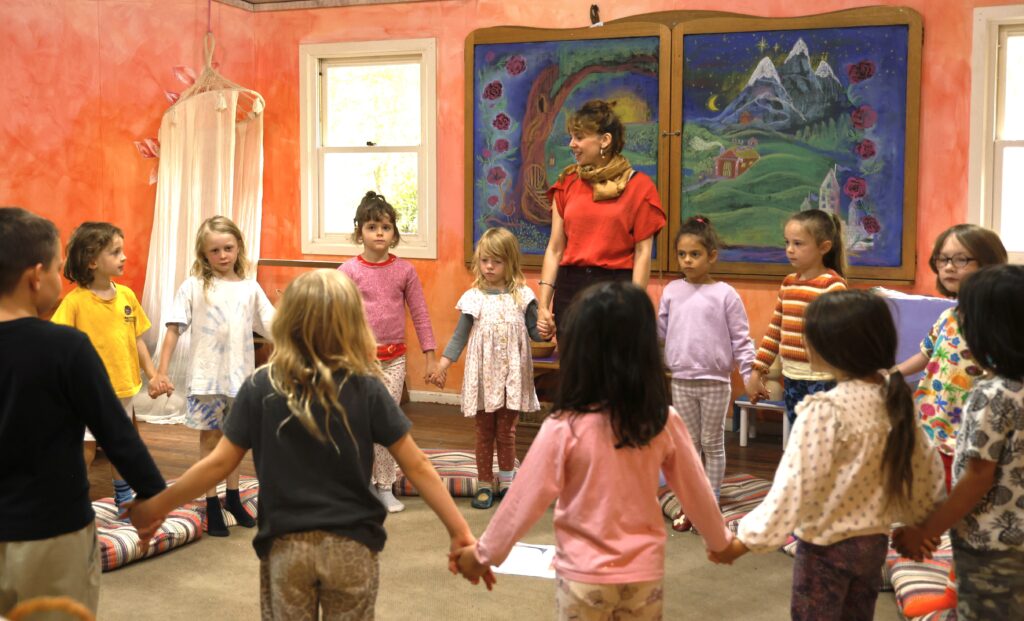
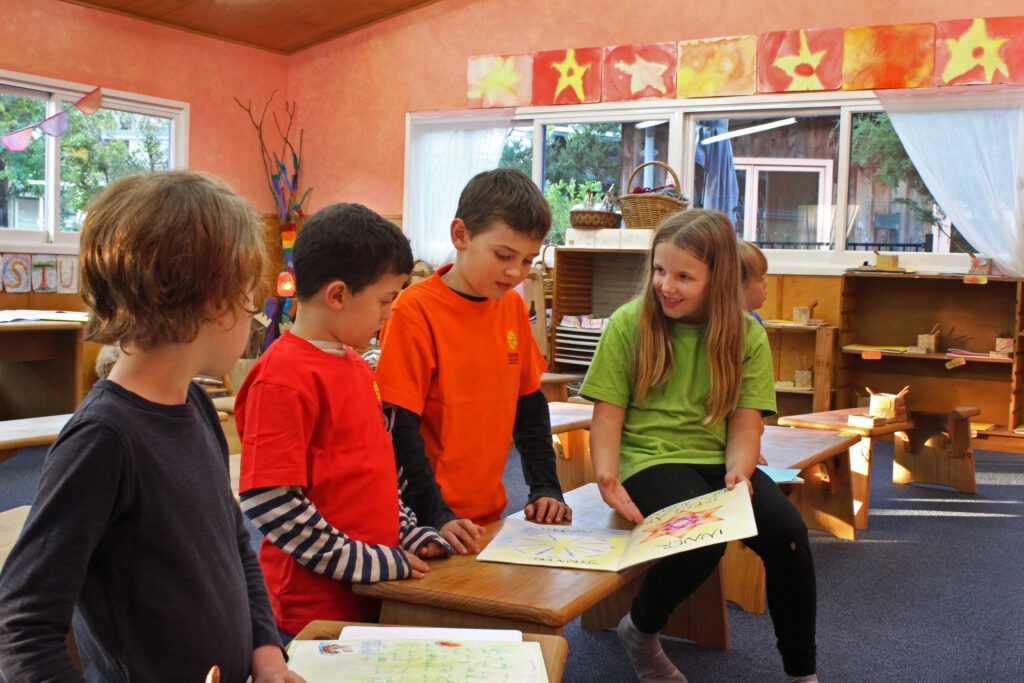
The early primary years are a time of wonder, imagination and growing confidence in the world. In Classes 1 and 2, learning is carefully shaped to support children as they cross the threshold from early childhood into formal schooling.
Teaching is grounded in story, rhythm and artistic activity, allowing children to meet academic content in a way that feels meaningful and alive. Literacy and numeracy are introduced through rich images, movement and hands-on experience, supporting deep understanding rather than hurried outcomes.
A strong daily and weekly rhythm provides security and continuity, while outdoor play, practical work and artistic expression nourish the whole child. Through this balanced approach, students develop a love of learning, growing resilience and a sense of belonging within the classroom community.
Class 1
In Class 1, children step into the world of stories and letters, discovering the joy of learning through imagination and movement. In Fairy Tales & Literature Main Lessons, letters and writing come alive through enchanting stories, sparking curiosity and creativity. Children create gentle shapes in Form Drawing, strengthening coordination, focus, and spatial awareness and in Mathematics, the four operations are brought to life by gnomes who creatively build number sense and curiosity through stories and adventure.
Class 2
In Class 2, learning deepens as children explore stories, nature and their surroundings with growing confidence and skill. Fables and Legend tales of saints, animals, and Celtic-Irish legends invite reflection on kindness, courage, and moral lessons. Geographical skills are brought to life by exploring our rich local community, thus developing the young child’s sense of place and belonging.
Middle primary (Classes 3-4)
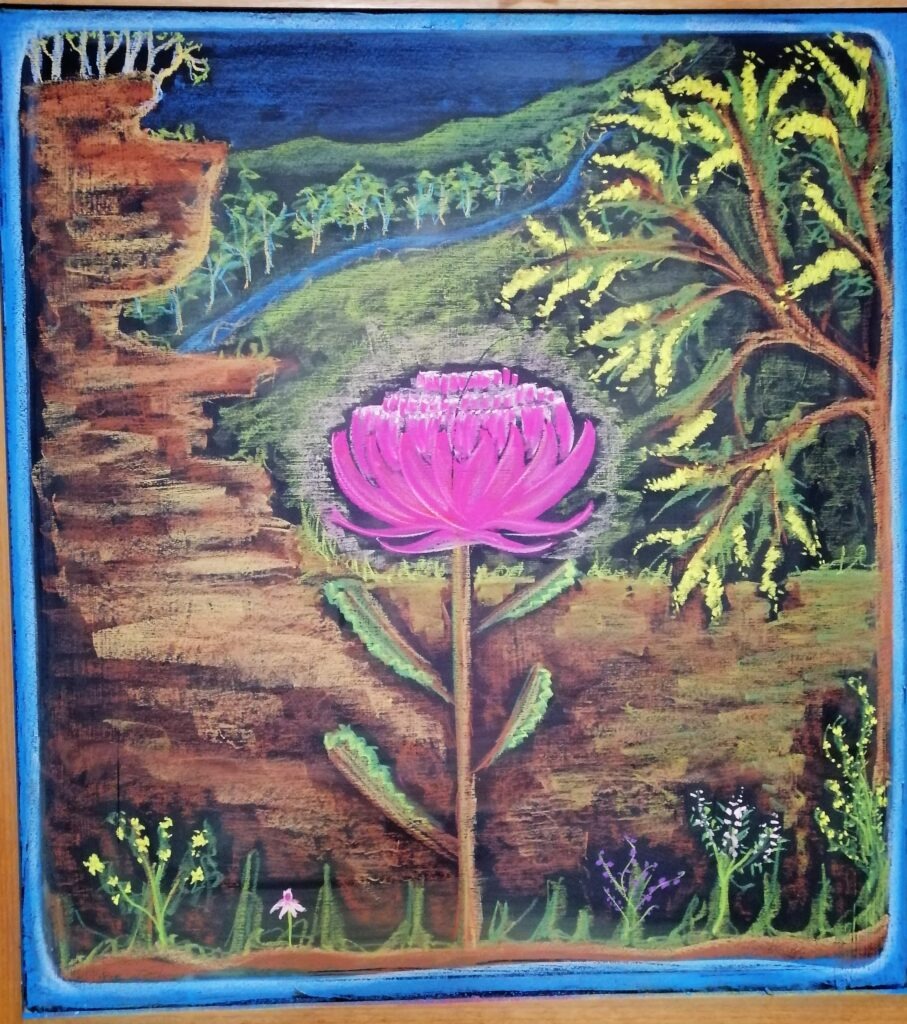
As children move into their ninth year, and into a pivotal time of development in their middle primary years of schooling, there is a metamorphosis in the way they view the world and experience their feeling life, with a sense of awakening and self-awareness arising. They become more perceptive of themselves as an individual and of independent thoughts and realities. Imagination and creativity is now evident and nurtured in a new way with children engaging in a different relationship with their surroundings, deeply connected to meaningful, practical life.
The children are supported in this through the curriculum and its rich experiences, as well as the consistent relationships of their teacher and class cohort at this stage, to develop the security and competency needed to navigate the challenges, and joys, of the future ahead.
Class 3
In order to make sense of the realities of the world they are now awakening to, the children seek to master and understand real-life skills and knowledge; not through dry, abstract facts, but practical experience and stories that tell of these in a living, embodied way. They wish to find beauty, truth and order and their sense of self and place in this new way of being. Studies in farming, building and gardening meet this need, and learning the “rules” of various disciplines, such as through an introduction to grammar, music notation and the instrumental program and measurement, a growing, healthy confidence is supported. Creation stories and those of the Hebrew tradition also feature at this time, with their themes of authority balanced with individual freedom.
Class 3 children will typically now also experience their first class camp and become more active within the wider school and local community.
Class 4
In Class 4 , children reach a midway point between early childhood and the transition to puberty. There is now confidence and energetic eagerness to establish themselves, both socially and geographically, as they begin to see and explore different and new found perspectives. Local and First Nations geography, history and mapping work addresses this need and skill and children take first, gradual steps towards more objective historical and scientific study. A much loved science lesson, whereby children investigate the animal kingdom and its relationship to the human world, is undertaken. Children also discover the origins of writing and development of language.
The ability of students to now effectively break down “the whole into its parts”, forging and recognising separate views beyond that of the group consciousness, is also reflected in the work on fractions this year, as well as in the myths of Scandinavian tradition: stories featuring resilience despite adversity, told with a sense of courage, humour and an acceptance of our unique qualities, mirroring the children’s own stage of development.
Senior primary (Classes 5-6)
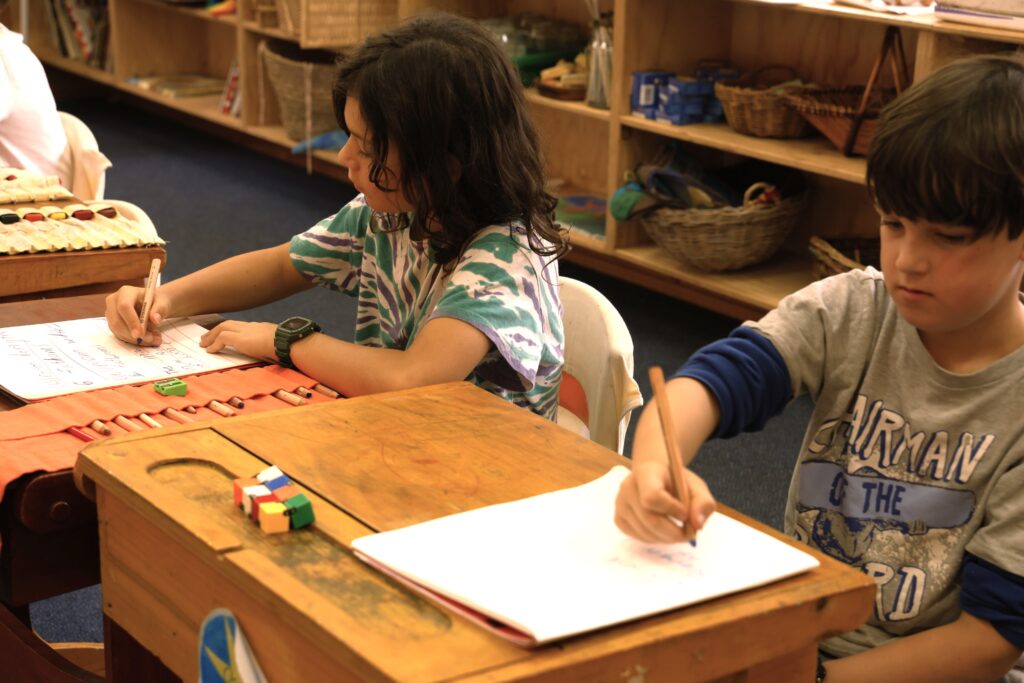
As the children enter the upper primary years of Class 5 and 6, they show a further developed capacity for memory and understanding, exploring their learning in a more realistic, objective and reasoning manner, although the imaginative, feeling and pictorial element remains important. This a time when children are able to reach a pinnacle in their standards of work with a surge in intellectual ability and feeling for conscience and responsibility. There is a growing orientation towards the outer world, the interrelatedness of life and the environment.
To meet this and provide the necessary challenge and inspiration, children are immersed in the history of our world, human evolution and the great cultures of ancient times. Opportunities to actively discover, observe and make deductions from phenomena are also given and encouraged, and beauty combined with logic and accuracy, such as in geometry, science and physical education is fostered. Through this, children learn to turn towards the world and whatever they meet in loving service and openness.
Class 5
Often referred to as the golden age of childhood, this is a time when children typically experience balance, harmony and ease in themselves and with others. This beauty of form is seen in compass drawing in geometry, participating in inter-school “Greek Olympics” requiring grace, strength and skill in movement along with camaraderie with peers, and in the study of botany.
The study of decimals in mathematics utilises new cognitive and reasoning abilities and the ancient cultures of India, Persia, Egypt and Greece are enthusiastically embraced by students, following the journey of human evolution over time through rich stories, study of geography and histories, artistic expression and language.
Class 6
As the children approach the culmination of their primary years and the entering of puberty, bringing new physical and social challenges, attention is given to learning for their firm steps into the outer world. They are supported to exercise their own judgement and express themselves in a considered way, becoming more self-directed and able to apply logic to form conclusions.There is more opportunity for individual research projects and presentations within lesson topics as children are able to more actively seek out ideas and discoveries in the realms of science, mathematics, history and geography.
The study of business maths provides initiative for real world applications and the stories of Ancient Rome offer fascinating explorations into government and debate, invention and engineering and an industriousness with ties to modern society that strongly appeals to the Class 6 child. The heaven and earth are studied with wonder through astronomy, physics and geology. Through biographies and hearing of life experiences where adversity is often encountered but overcome with conviction in the overall sense of good in the world, these children begin to form the means to go forth and give of themselves with freedom yet social responsibility and care.